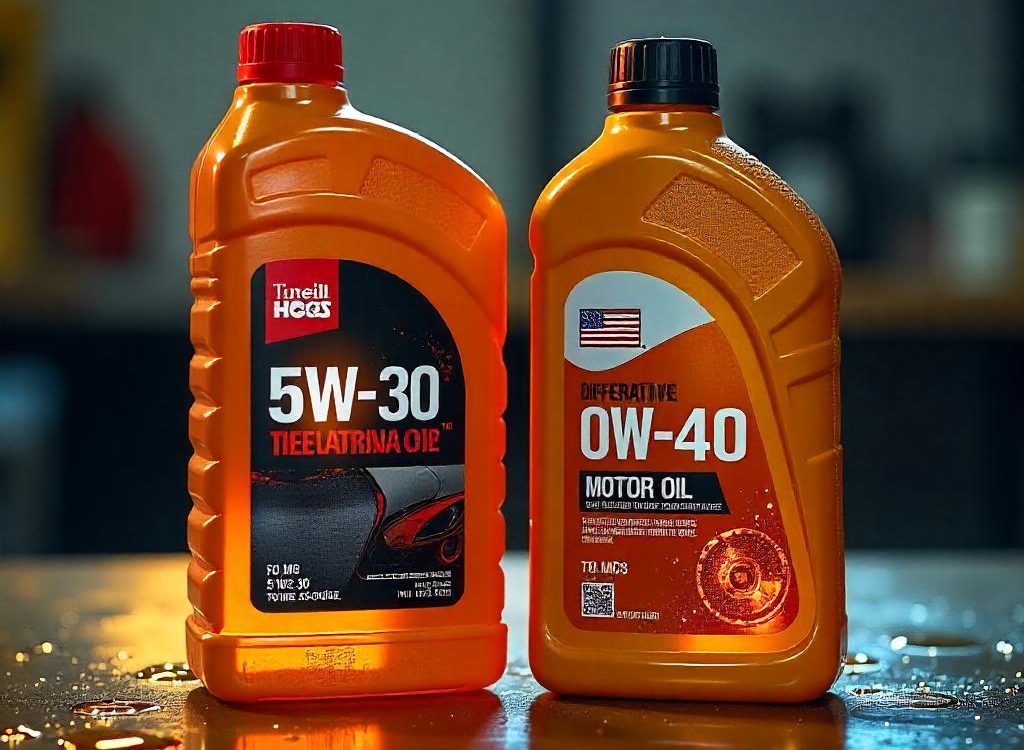
Walk down the oil aisle at any auto store, and you’ll see a dizzying array of labels like 5W-30, 10W-40, 0W-20, and more. These aren’t just random numbers—they’re carefully engineered viscosity grades that determine how your engine oil flows in different conditions. And for most car owners, the confusion usually centers around two of the most common grades: 5W-30 and 10W-40.
So what do these numbers actually mean? Which one should you use—and when? This article decodes the terminology, explains how oil behaves in cold and hot temperatures, and helps you choose the right viscosity based on climate, engine type, and driving conditions.
1. What Do the Numbers Mean?
Engine oil grades like 5W-30 or 10W-40 are classified by the Society of Automotive Engineers (SAE) and refer to multigrade viscosity—that is, how the oil flows at different temperatures.
Let’s break it down:
- “5W” or “10W” refers to the oil’s viscosity in cold temperatures. The W stands for winter, not weight. The lower the number, the thinner the oil is in cold conditions.
- “30” or “40” refers to the oil’s viscosity at high (operating) temperatures, usually around 100°C (212°F). A higher number means the oil is thicker at those temperatures.
So:
- 5W-30 = Flows like a SAE 5-weight oil when cold, like a 30-weight when hot
- 10W-40 = Flows like a 10-weight when cold, 40-weight when hot
This dual rating allows the oil to perform well in both cold starts and hot engine operations, ensuring your engine is protected across a range of conditions.
2. Why Viscosity Matters
Viscosity is simply oil’s resistance to flow. If it’s too thick, it won’t circulate quickly enough in cold starts, leading to increased wear. If it’s too thin, it won’t provide adequate lubrication at high temperatures.
According to Shell Lubricants (2020), nearly 75% of engine wear occurs at start-up due to delayed oil flow. That’s why winter viscosity (e.g., “5W” or “10W”) is so important—especially in colder climates.
3. Comparing 5W-30 vs 10W-40
Let’s look at how these two oils stack up in real-world use.
| Feature | 5W-30 | 10W-40 |
|---|---|---|
| Cold Weather Start | Better (flows faster) | Slightly thicker when cold |
| Hot Temp Protection | Standard (suitable for most) | Thicker, better for high heat |
| Fuel Efficiency | Slightly better | Slightly lower |
| Engine Age | Ideal for newer engines | Preferred for older/high-mileage engines |
| Common Use | Daily commuting, modern cars | Towing, hot climates, older engines |
5W-30 is generally recommended for modern passenger cars, especially in regions with cold winters. It ensures faster lubrication during cold starts and is often the manufacturer-recommended oil for cars built after 2000.
10W-40 is preferred in hotter climates, older engines, or high-load conditions (like towing), where the extra thickness at operating temperature helps prevent metal-on-metal contact in engines with looser tolerances.
4. Climate and Seasonal Considerations
Cold Weather: In colder climates, oil needs to flow quickly on start-up. 5W-30 is more suitable as it flows better in sub-zero temperatures. Using 10W-40 in freezing conditions can lead to sluggish starts or increased wear due to slow oil circulation.
Hot Weather: In regions with consistently high temperatures (e.g., Northern Nigeria, Arizona, Middle East), 10W-40 offers better high-temp stability and film strength, particularly for long highway drives or vehicles under heavy loads.
A 2018 study by SAE International revealed that engine oils with higher high-temp viscosity (like 40-grade oils) provided up to 12% better wear protection in extreme desert driving scenarios compared to 30-grade oils.
5. Engine Age and Mileage
For engines with high mileage or worn seals, thicker oil like 10W-40 can help reduce oil burning and leaks. The added viscosity helps maintain pressure and forms a more durable lubricating film.
Many high-mileage oils specifically come in 10W-40 grades and include conditioning agents to rejuvenate seals.
However, for newer engines, especially those with tighter internal tolerances and variable valve timing systems, 5W-30 is usually more appropriate. Thicker oils can disrupt hydraulic systems or reduce fuel efficiency.
6. Manufacturer Recommendations Matter Most
While it’s tempting to choose based on assumptions, always start with your owner’s manual. Modern engines are built with specific oil grades in mind to balance wear protection, fuel efficiency, and emissions control.
For instance:
- Toyota Corolla (2020): Recommends 0W-20 or 5W-30 synthetic
- Nissan Frontier (2018): Allows 10W-30 or 10W-40 depending on climate
- Ford F-150 (2022): Typically recommends 5W-30 for EcoBoost engines
Using oil with the wrong viscosity may void warranties or cause long-term damage to the engine.
7. Synthetic vs Conventional Oils in These Grades
Both 5W-30 and 10W-40 are available in synthetic, synthetic blend, and conventional options.
- Synthetic 5W-30: Better for fuel efficiency, cold starts, and long intervals
- Synthetic 10W-40: Great for high heat, heavy loads, or turbocharged engines
- Conventional 10W-40: Cheaper but requires more frequent changes
- Synthetic blends: A middle ground offering improved performance at lower cost
According to Mobil 1 (2021), switching from conventional 10W-40 to synthetic 5W-30 improved cold-start lubrication by 40% in standard lab tests, especially below -10°C.
Conclusion: Choosing the Right Oil Grade
Understanding viscosity grades empowers you to choose the best oil for your driving conditions, engine type, and climate. While both 5W-30 and 10W-40 have valid use cases:
- Use 5W-30 if you drive a modern vehicle, live in a cold climate, or want better fuel economy.
- Use 10W-40 for older cars, hot climates, or when towing or carrying heavy loads.
Still unsure? Check your vehicle manual, consider the environment you drive in, and talk to a qualified technician if your car has high mileage or specific performance needs.
References
- SAE International. (2018). Engine Oil Viscosity and Wear Study in High-Temperature Conditions.
- Shell Lubricants. (2020). Cold-Start Performance of Multigrade Oils.
- Mobil 1. (2021). Synthetic Oil vs Conventional Oil Cold Weather Performance Report.
- Toyota Motor Corporation. (2022). Toyota Corolla Owner’s Manual.
- Ford Motor Company. (2022). F-150 Maintenance and Lubrication Guide.
- Valvoline. (2020). Choosing the Right Engine Oil Grade.